How I Learned To Stop Hating a Simple Somatic Tool
I used to hate orienting.
In simplest terms, orienting is the practice of slowly looking around.
That’s it. Orienting can also include noticing sounds, textures, smells, or tastes.
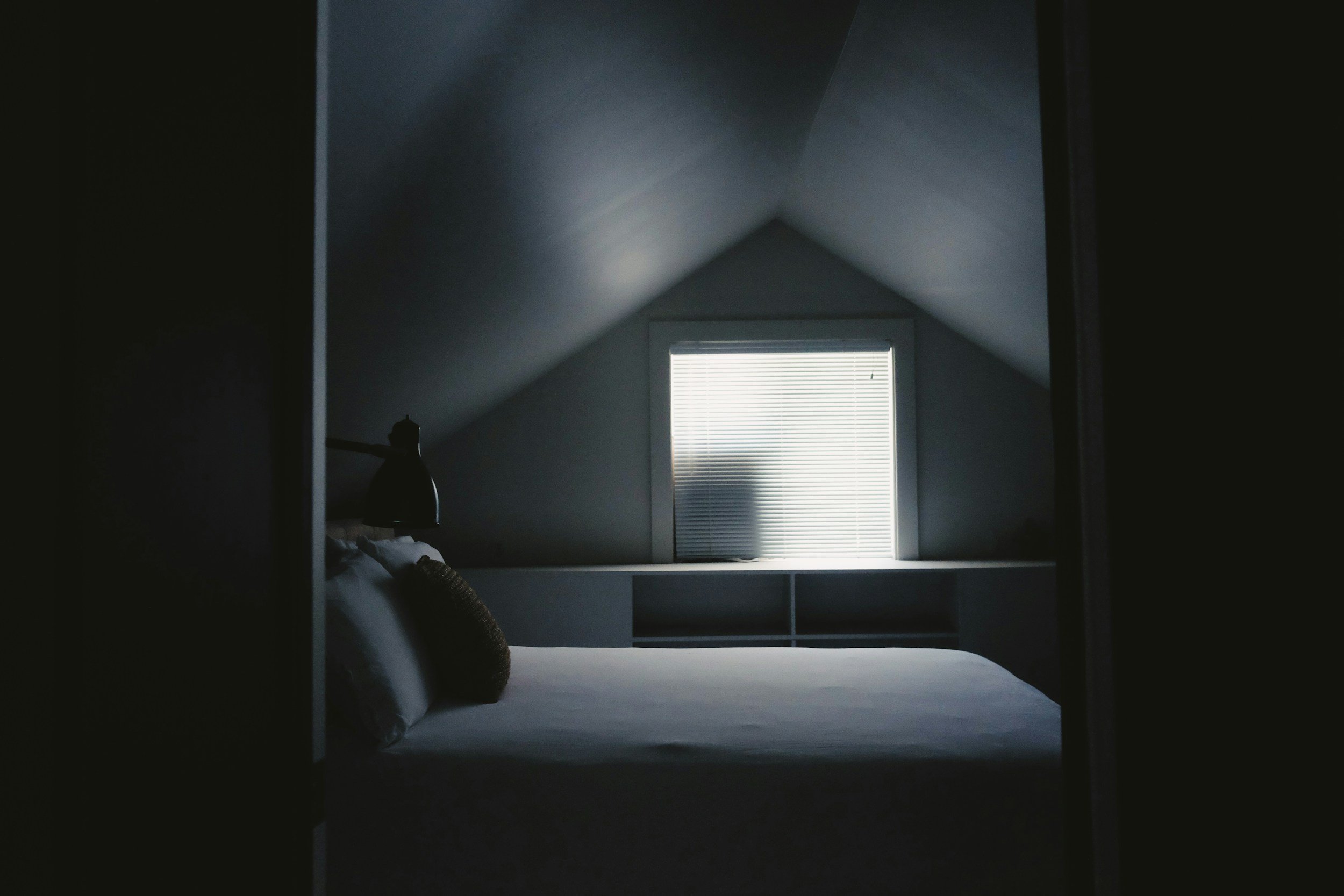
But when I first tried it (and many times afterward), I didn’t like it. When I moved my gaze around my space, all I could see were things that required my labor, like a cobweb in the ceiling corner or a pile of unfolded laundry. If I were healthy and well, this would have just been annoying.
But since I was very sick and very unwell, I didn’t have the energy for any of these tasks. And I had been without energy and often confined to my bedroom for so long that gazing around that space only reminded me of how long I had been stuck there.
Orienting made me more anxious, ashamed, and depressed.
Not exactly the results we seek from our somatic practices.
I also hated another version of orienting I learned from a therapist: Look around the room and find five blue things, four yellow things, three red things, two orange things, and one green thing.
“Let’s see,” I would start, my system flooded with constant adrenaline and cortisol. “Um, there’s a blue pillow, a blue vase, you’re wearing a blue shirt–wait, how many was that? I just noticed something orange and got distracted. Let me start again.”
It would go on like this, me starting and stopping and getting more overwhelmed with each attempt of a task that was supposed to calm me. It was a test I couldn’t pass no matter how hard I tried and only reminded me that something was very wrong with my brain.
A functional neurologist eventually validated my strange and frightening symptoms. After a series of tests, she told me I had cranial nerve damage, specifically in the tenth cranial nerve. Also known as the Vagus nerve, the key neural network of our nervous system regulation. And since mine had been, in the words of the neurologist, metaphorically “stomped on” by a series of viruses including the novel coronavirus, years of stress as a parent, and childhood trauma, it was unable to do its job, which is why I lived in exhausted panic every day.
At this time, my window of tolerance was incredibly small and my nervous system had suffered so much that it perceived almost every piece of sensory input as a threat. I was startled by the gentle movement of a curtain in the wind. The background rumbling of appliances felt inexplicably ominous and made my head pound. Any light brighter than a dim glow sent my heart racing.
But I kept hearing about orienting as a somatic practice that can help calm the nervous system.
If a practitioner suggested it, I forced myself to do it, only to feel my panic rise. Maybe I’m just not trying hard enough, I would think. Maybe I need to just do it more often and for longer sessions.
You can guess how that turned out.
Many months later, I braced myself when another somatic practitioner mentioned orienting. Not this again, I thought. Then she said something radical. “If it’s not working for you today, or increasing your stress, just drop it and try a different tool.”
What? I didn’t have to just push harder to make a practice work for me?
If my nervous system was going to start trusting me again and begin healing, I had to stop doing things to my body.
I had to start doing things with my body.
It was a subtle but profound distinction. I began to notice more than one teacher say different versions of: “The how is more important than the what.”
They also said things like, “Slower is faster. Less is more.”
This took a long time for me to truly understand and then actually practice. In my past as a dancer and athlete, I did some things with my body, but more often to my body: repeating movements over and over until I mastered them, usually pushing through pain and fatigue the whole time. Applying this approach to nervous system healing was making me sicker.
As they say in my addiction recovery communities, the credits didn’t transfer.
But the new influence of these somatic teachers led to a shift, and my orienting practice started to change.
Orienting may be simple, but it is not easy. At least at first.
I let go of expectations and started trying it for a couple minutes at a time. If I found one object that made me feel the tiniest bit safer or a glimmer of pleasure, or even just neutral, I would stay with it for a few breaths. I started to tune into the sensation of my neck slowly turning and my eyes very gently moving in their sockets. In my familiar bedroom and home office spaces, I started to focus on a few potted plants, which felt soothing as I thought about their life force.
I learned that many wild animals such as lions orient to their environment by gazing around. Early humans also did the same thing. If they confirm the environment is safe enough to let down their guard, they might groom each other, nap together, or enjoy a meal (hence a relaxed nervous system known as a “rest and digest” state).
I started picking up on the subtle cues and sensations of my body and the way she would respond to the glistening green leaves of the ferns outside or the branches of a maple tree moving in a breeze. I noticed that I was able to feel pleasure instead of panic when looking at certain things again: my children’s drawings on the wall, a flickering candle, dust motes dancing in sunbeams streaming through the window.

I stopped trying to follow a specific protocol or set of requirements. I no longer tried to track things by color. I let my attention drift and began to very slowly trust it again.
As this trust deepened, I felt a return to the innate observation of my childhood. The freedom of taking in our world without expectations or pressure. I could spend hours looking around outside when I was a kid, observing crayfish in the creek at the edge of our property or my cat’s tail brushing against the tall grasses in the field behind our house.

Me, age 7, enjoying some quality orienting time in the creek by my house in rural Georgia
I also returned to the observation skills I learned as a young artist, the deep attention required to notice and match the specific shades and shapes of the trees, flowers, and bodies of water I wanted to capture in watercolor.
As I have come to love orienting again, I relish in bringing my intuitive attention to movement, color, and light. My body and nervous system know how to receive soothing stimuli once more.
We are born knowing how to explore the world around us with curiosity, but trauma and chronic stress can separate us from this core part of our human experience. We can reclaim it through patience and practice.
If you are new to orienting or have tried it and hated it like I did, here are some suggestions:
Choose a location that feels quiet and peaceful or at least neutral. You can be lying down, sitting, or engaging in movement such as stretching or walking.
If at any point during this practice your discomfort increases or the practice is just not working for you today, drop it and take a break. You might choose another somatic tool if that is available to you.
Allow your body to be as comfortable as possible. Take an extra moment to change your position or posture or location if you need to.
Slowly turn your neck in one direction, letting your eyes land on things in your space or outside a nearby window. You might notice light, color, and/or movement. Or you might choose to focus on the sensation of your neck turning or your eyes gently moving in their sockets. If it feels easy, you might shift your attention back and forth between what your gaze is taking in and the sensations within your body.
Pause when your gaze rests on anything that brings you even the slightest soothing sensation or pleasure.
As you gaze at this item or being, take a few easy breaths, as if you are breathing in the positive association.
You can do this for 30 seconds or one minute. Or if it is feeling supportive, you can try it for longer.
You could also experiment with films or clips of soothing imagery.
Two recent films contain some gorgeous and slow nature scenes that are wonderful for orienting practice: Hamnet and Train Dreams. (Their larger story arcs are quite intense and grief-heavy, so if that is not in your capacity right now, you might just watch the first couple minutes.)
Or, you might try listening to my guided orienting practice:
Or check out my video of a waterfall in Bergen, Norway:
Remember that less is more, and slower is faster. Take what you like and leave the rest.
We also often practice guided orienting during my virtual Sacred Rest gathering (every Thursday!)
(Can’t make the virtual class? Contact me to receive a recording you can access on your own schedule.)
I hope you can join me soon!
Your rest friend,
Stacy
WEEKLY SACRED REST
Date: Every Thursday
Time: 5:30-6:30 pm PST
Where: On Zoom
JOIN ZOOM MEETING:
https://zoom.us/j/97764119321?pwd=5vtWbSnjNGjKBL6aqqQdJ5GZM9f3Cm.1
Meeting ID: 977 6411 9321
Passcode: time4rest